LinkedIn Personal Brand Agent
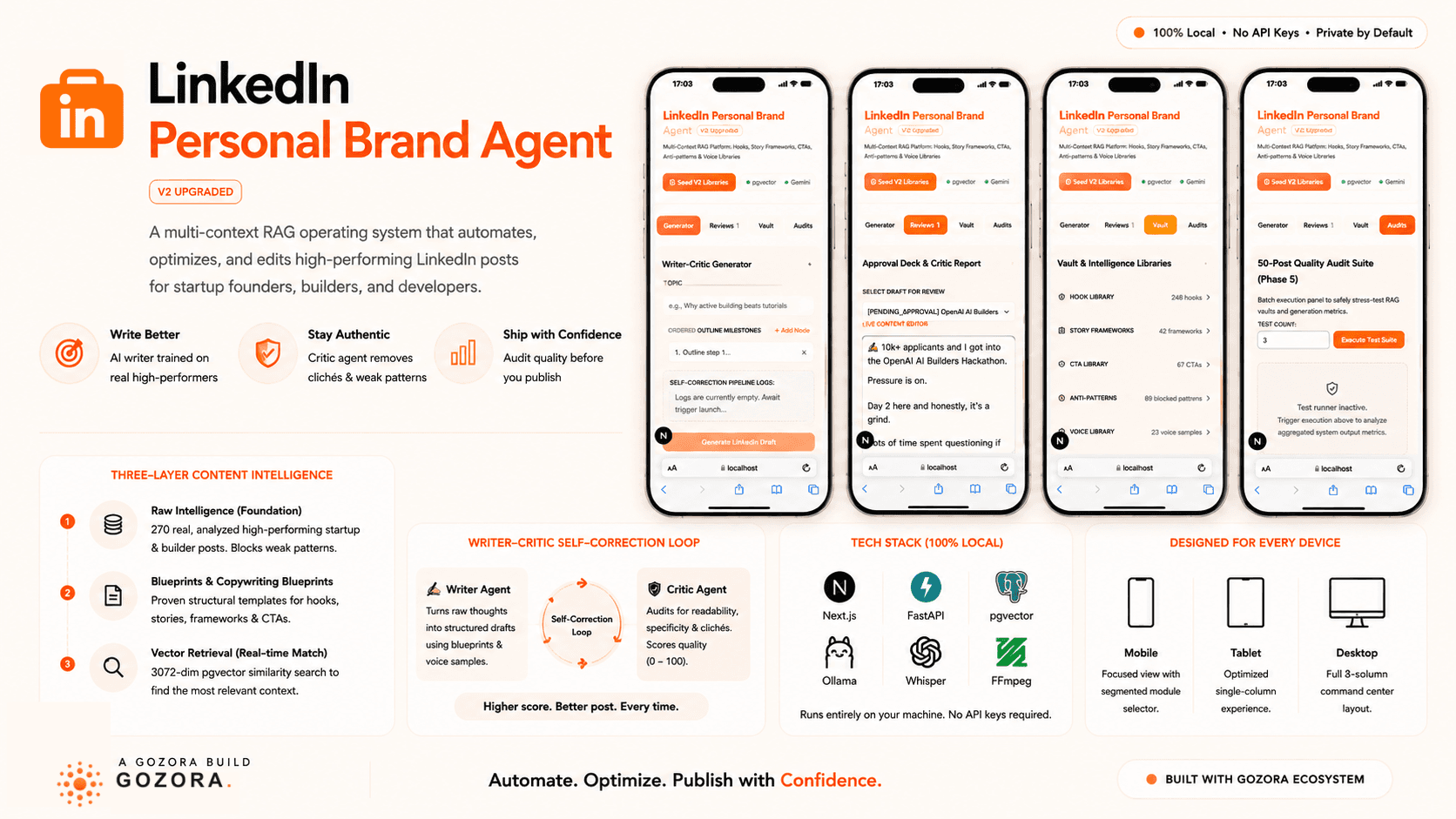
A premium Multi-Context RAG Operating System that turns raw developer logs and startup convictions into high-performing, mobile-optimized LinkedIn posts. Powered by a 3072-dimensional pgvector similarity vault and a self-correcting Writer-Critic loop, it eliminates generic AI clichés to generate authentic, high-converting content designed to scale personal brands.
The Challenge
Building an authentic, high-leverage personal brand on LinkedIn is one of the most effective strategies for modern startup founders, technical builders, and solopreneurs to drive hiring, distribution, and fundraising. However, they face a severe trilemma: Time, Authenticity, and Technical Specificity.
1. The Time Constraint vs. Growth Bottleneck
Consistently publishing high-quality content requires hours of reflection, drafting, and editing every week. For founders operating in high-stress, execution-heavy environments, this operational overhead is unsustainable. They are forced to choose between building their product or building their audience.
2. The Failure of Generic AI Copywriting
Standard AI writing assistants rely on generic prompts and flat training models. This results in content characterized by:
- The "AI Voice": Immediate giveaways like "delve", "leverage", "tapestry", and "in today's digital landscape".
- Low Specificity: Vague, high-level platitudes instead of concrete details (e.g., naming specific file paths, console errors, framework versions, or university classes).
- Audience Disengagement: Sophisticated tech audiences instantly tune out generic advice, leading to a loss of trust and drop-off in organic reach.
3. Context Fragmentation and RAG Limitations
Traditional RAG (Retrieval-Augmented Generation) systems draw from flat databases. They fail to orchestrate multi-vault queries, leaving the LLM unable to synthesize:
- The user’s raw memory logs (lived experiences).
- The user’s core convictions (thought leadership opinion).
- Structured copywriting blueprints (proven hook and CTA templates).
- Comparative feedback (explicit success and failure references to guide the style).
4. The Mobile Operations Friction
Founders and builders work on the move. When inspiration strikes or drafts need approval, they use their phones. Standard developer interfaces and multi-column dashboards break down on small viewports, forcing users to scroll through endless sections of input fields, raw JSON reports, and editor textareas. Creating a tool that is highly functional yet visually uncluttered on mobile was a primary user experience challenge.